Crop Spraying - Aerovision Drone LLC
Precision Aerial Crop Protection and Foliar Applications
Aerovision Drone LLC delivers precision crop spraying solutions designed to protect yield potential, reduce chemical costs, and provide rapid treatment during critical application windows. Our licensed drone pilots and modern aerial platforms allow fast, targeted application of herbicides, fungicides, insecticides, and foliar nutrients across corn, soybeans, wheat, and specialty crops. Based in Linn, MO, we serve growers who require accurate application, timely service, and reliable reporting to support their season-long management decisions.
Why Crop Spraying Matters
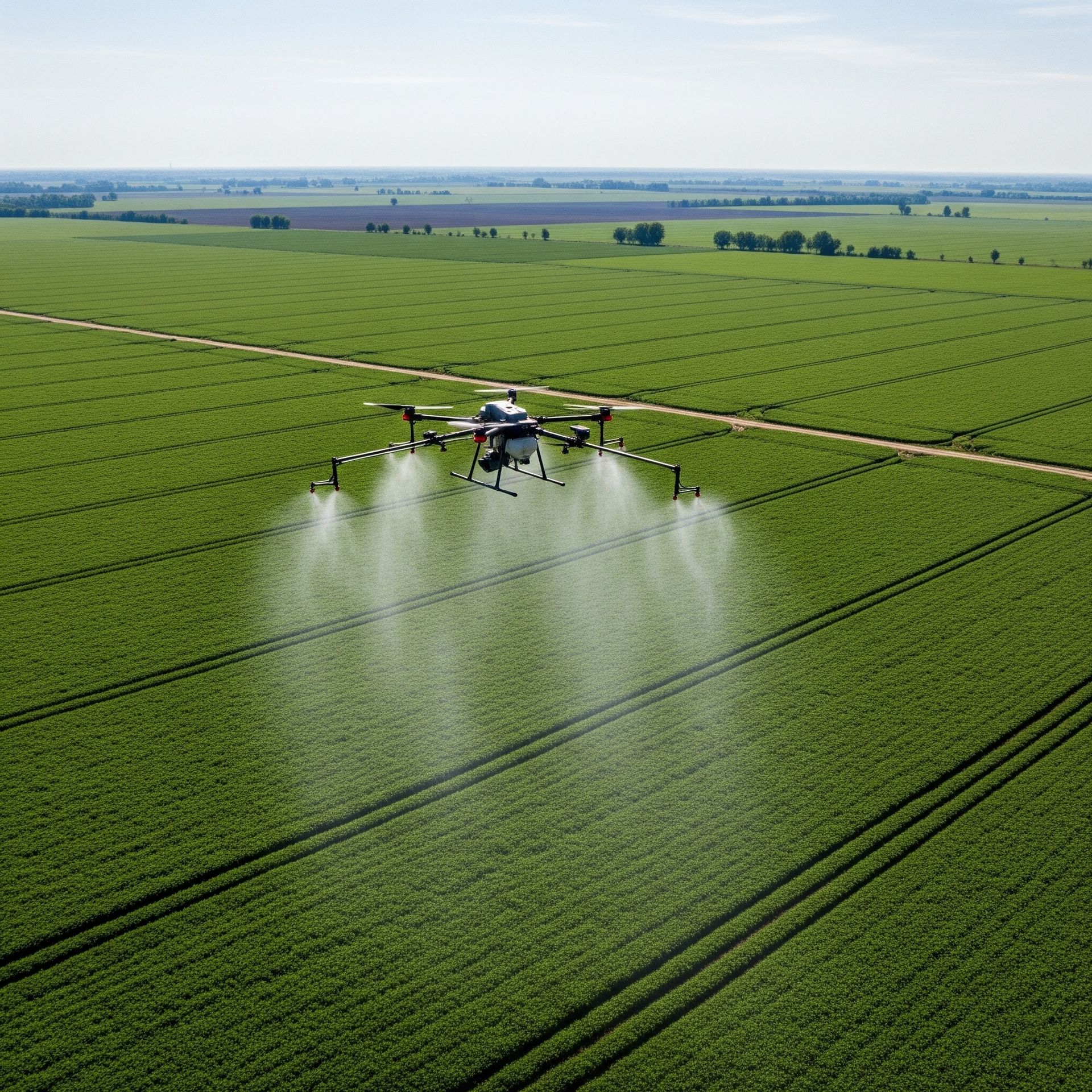
In-season pest pressures and disease outbreaks can appear quickly and spread rapidly. Timely, accurate application during the short windows when products are most effective can make the difference between a minor loss and a significant yield reduction. Traditional ground rigs or manned aircraft have their place, but drone crop spraying offers unique advantages:
Precise target application for spot treatments and early intervention.
Faster deployment for time-critical product windows.
Reduced compaction where ground rigs would damage wet fields.
Lower application volumes with accurate droplet control and improved efficacy.
Key Benefits of Drone Crop Spraying
Precision and Coverage
GNSS-guided flight plans ensure uniform swath overlap and accurate coverage of the intended crop area.
Reduced Drift
Optimized flight heights and droplet size selection minimize drift risk into adjacent fields or sensitive areas.
Rapid Response
Early intervention can be scheduled quickly, providing growers with timely protection during critical growth stages.
Improved Safety
Remote operation reduces operator exposure to chemicals and hazards associated with ground spraying over wet or uneven fields.
Integrated Data
Post-flight maps and imagery allow verification of coverage and identification of untreated zones needing follow-up.
How Aerovision Drone LLC Conducts Crop Spraying
Consultation and Planning
Field Assessment: We assess crop growth stage, canopy density, and access to water for buffer requirements. Target areas are identified using grower input and optional drone scouting imagery.
Product Choice: We advise on product selection consistent with crop and pest/disease labels and provide guidance on optimal application timing.
Flight Plan Design: Flight height, speed, nozzle selection, and swath settings are configured to match canopy characteristics and product requirements.
Calibration and Execution
Nozzle Calibration: Ensures correct flow rate and droplet spectrum for the product in use.
Pre-Flight Safety Checks: Includes weather checks, field communications, and verification of crew and equipment readiness.
Flight Execution: Controlled, repeatable flight paths ensure even coverage and the ability to overlay treated areas onto maps for verification.
Data and Reporting
Treatment Log: We provide a comprehensive log containing applied rates, flight time, and GPS traces.
Imagery: Optional pre- and post-application imagery can be collected to identify treated vs untreated areas and to monitor crop response.
Recommendations: Based on mapping and observations, we provide next-step recommendations for additional treatments or cultural controls.
Applications and Use Cases
Early-season weed control: Targeted applications before weeds dominate the canopy.
Spraying in wet conditions: Avoid ground compaction during early spring or after rains by using drone applications.
Foliar nutrition: Apply micronutrients and foliar feeds in targeted areas where soil availability is limited.
Disease and pest hotspot treatment: Apply fungicides and insecticides quickly to outbreak zones.
Specialty crops and orchards: For smaller acreage or tight canopy structure, drones offer precise coverage where larger equipment may struggle.
Compatibility and Crop Safety
Product Labels: We strictly adhere to label instructions for crop safety and efficacy.
Canopy Considerations: Flight parameters are adjusted to produce droplets and coverage suitable for the crop structure to avoid canopy damage or ineffective coverage.
Buffer Management: We respect legal buffer zones to protect waterways, non-target crops, and neighboring properties.
Advantages over Other Application Methods
Compared with Ground Sprayers: No soil compaction and better accessibility during wet periods.
Compared with Manned Aircraft: Lower cost for small to medium acreages, better precision for spot treatments, and simplified scheduling.
Compared with Manual Spot Spraying: Faster, safer, and more uniform coverage across many acres.
Economic Considerations and ROI
Growers typically observe cost-savings when using drone applications for spot treatments and early-season interventions due to reduced chemical volume, lower labor costs, and minimized downtime waiting for ideal ground conditions. We provide a clear cost-per-acre estimate and project the potential ROI based on reduced input and increased protection of yield.
Implementation Timing and Scheduling
Critical Windows: Fungicide and insecticide applications are often time-sensitive; we prioritize scheduling to meet these critical windows.
Seasonal Planning: Pre-season planning for recurring treatment needs ensures availability when you need it most.
Frequently Asked Questions — Crop Spraying
Can you spray over standing crops without causing damage?
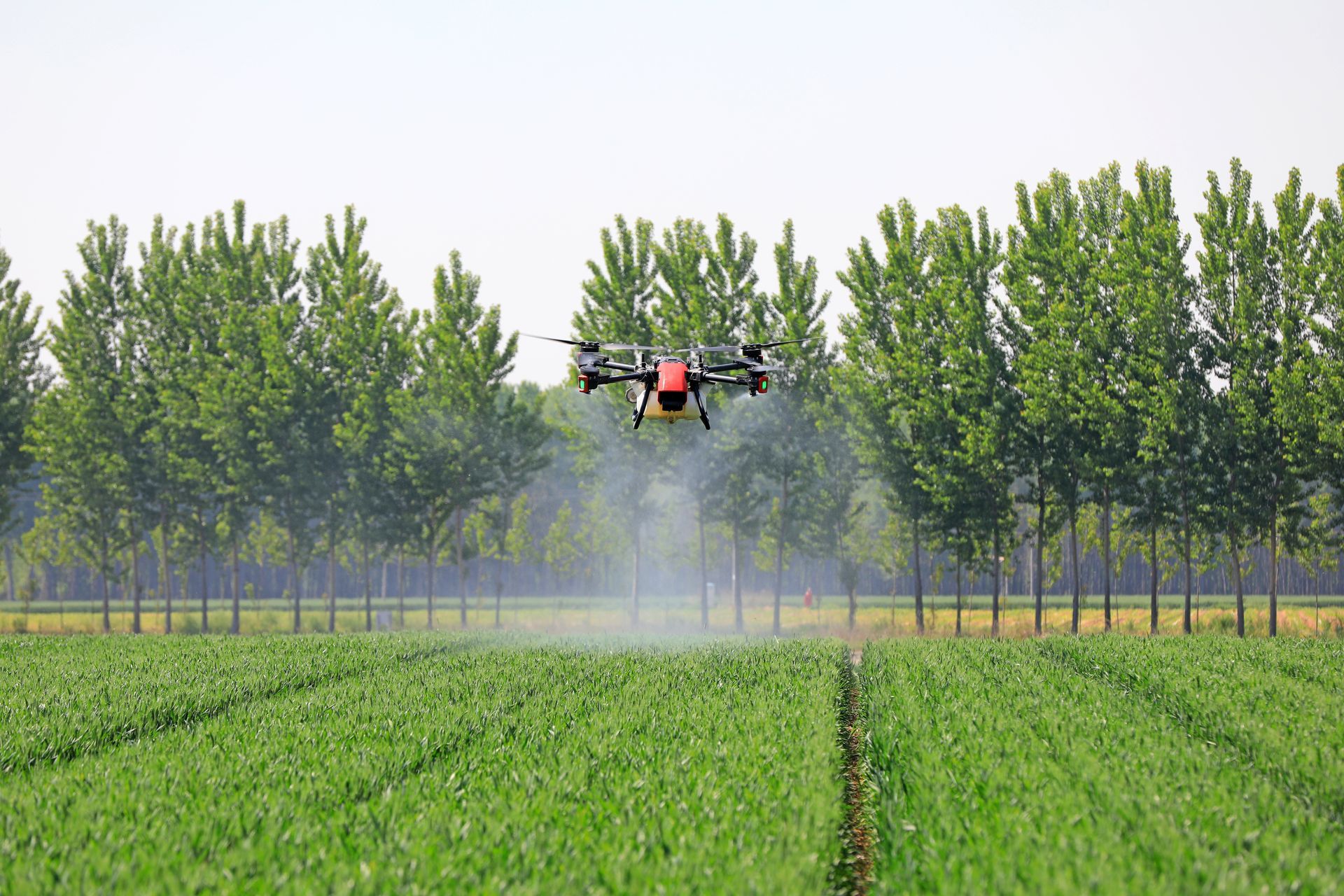
Yes. Flight height and droplet selection are matched to crop type and stage to ensure good deposition and minimal canopy damage. We follow product label instructions for crop safety.
How do you ensure even coverage across the field?
We use GNSS-guided flight paths, calibrated nozzles, and controlled swath overlap. Post-flight imagery can confirm even application.
Are you able to treat small patches within a larger field?
Absolutely. Spot treatment is a primary benefit of drone spraying — it’s ideal for targeting issues without treating entire fields.
What about drift and buffer zones?
We operate with conservative wind limits, select appropriate droplet spectra, and adhere to buffer zone rules to limit off-target movement.
book now
Contact Us
We will get back to you as soon as possible.
Please try again later.
Contact Us
To schedule crop spraying services, call (573) 578-5005 or visit our base at 398 Route CC, Linn, MO 65051. We’ll evaluate your field needs, recommend timing and products, and provide a straightforward quote.